


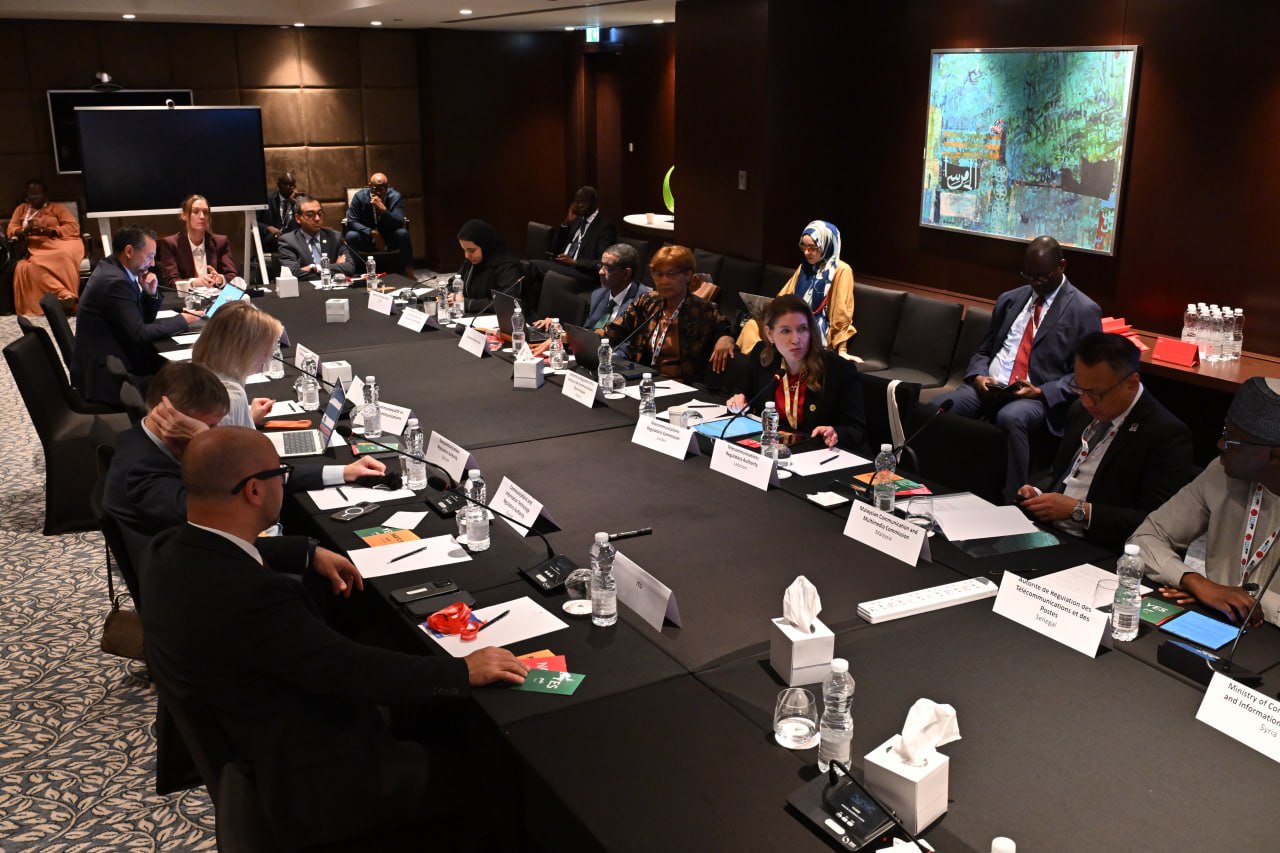
Focus of the discussion: the situation in the Middle East and North Africa (MENA) region.
To ensure a comprehensive discussion, representatives of the RCC and the Caribbean Association of National Telecommunication Organizations (CANTO) were invited to participate, bringing together countries facing similar conditions.
The main conclusions of the discussion, common to all three regions, were as follows:
• AI is becoming basic economic infrastructure, just as communications and the Internet did a generation ago
• Advanced models and computing power are supplied by a small number of global companies that determine the prices and conditions for access to AI technologies
• Countries face similar obstacles in building their AI economies but are addressing them individually
• Demand for AI is fragmented: ministries, universities, hospitals, small businesses, and developers purchase separately, in small volumes, and on terms they do not control
• In addition to cost, there are other barriers: payment in foreign currency, contracts requiring credit cards or cloud agreements, minimal supplier commitments, and a lack of expertise
• Governments and operators invest in data centers, national clouds, and local models without a clear understanding of actual demand
During the discussion, Ms. Maria Bolshakova, Deputy Director General of the RCC, noted:
"The needs of the countries in our region largely coincide: public services, research potential, SME productivity, models that work in our national languages, and sovereignty over confidential data. Agreed RCC positions, drawing on the experience of 'front-runners' — such as those on spectrum, roaming, and cross-border interaction — provide real support for countries that are only just beginning to address pressing technological issues. We are applying this logic to AI today as well."
⠀
For the latest RCC news, subscribe to our official Telegram channel.