


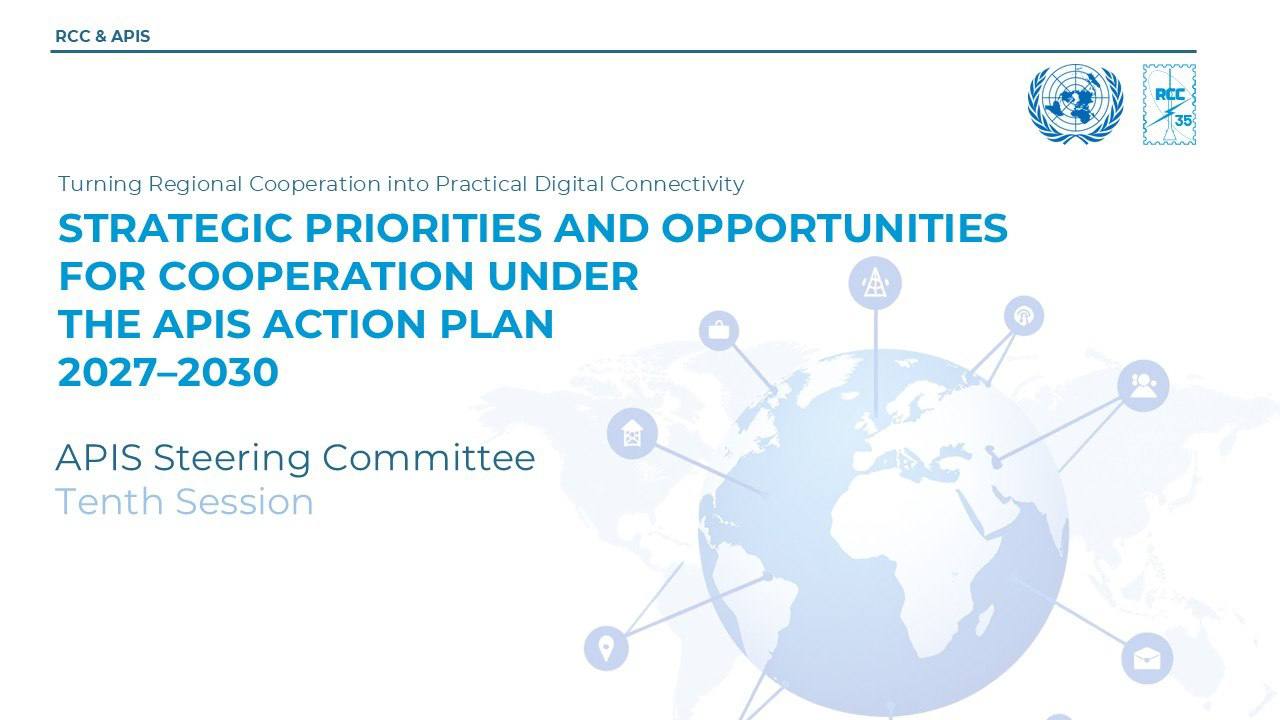
On September 1, 2026, the 10th session of the Asia‑Pacific Information Superhighway (APIS) Steering Committee was held in Bangkok, Thailand.
APIS is an initiative of the United Nations Economic and Social Commission for Asia and the Pacific (UNESCAP), launched in 2017.
Its main objective is to bridge the vast digital divide in the region: the Asia‑Pacific has historically had one of the largest gaps in access to high‑speed Internet.
Its goal is to create a dense, open‑access, cross‑border infrastructure network to make broadband Internet more accessible, reliable, and affordable for millions of people.
A key element is the laying and sharing of fiber optic cables, including submarine cables, which will provide both intra‑regional and intercontinental connectivity.
As part of the initiative's implementation from 2022 to 2026, UNESCAP members — the largest of the UN regional commissions — worked on three interconnected priorities:
• Connecting populations to digital services and applications
• Integrating new technologies into public services
• Promoting the use of digital data.
The previous Steering Committee meeting approved the APIS action plan for 2027–2030.
In June of last year, UNESCAP and the RCC signed a Memorandum of Understanding, which became the basis for cooperation between the two organizations.
The need for cooperation is evident: eight RCC member states are also full members of UNESCAP — Azerbaijan, Armenia, Kazakhstan, Kyrgyzstan, Russia, Tajikistan, Turkmenistan, and Uzbekistan.
During the 10th session of the Steering Committee, considerable attention was given to country‑specific achievements of UNESCAP members contributing to APIS goals. Such reports were presented, in particular, by Azerbaijan, Kazakhstan, and Russia.
Furthermore, Deputy Director General of the RCC, Ms. Maria Bolshakova, took part in the discussion on developing cooperation within the initiative's implementation, focusing her remarks on prospective areas of practical cooperation between the RCC and UNESCAP:
• Joint development of harmonized regulatory frameworks for new technology development and deployment
• Implementation of cross‑border connectivity initiatives and multi‑channel service delivery projects and initiatives
• Enhancement of regional digital integration and capacity building.
Practical cooperation between the RCC and UNESCAP is expected to grow through the implementation of APIS under the new action plan.
⠀
For the latest RCC news, subscribe to our official Telegram channel.